
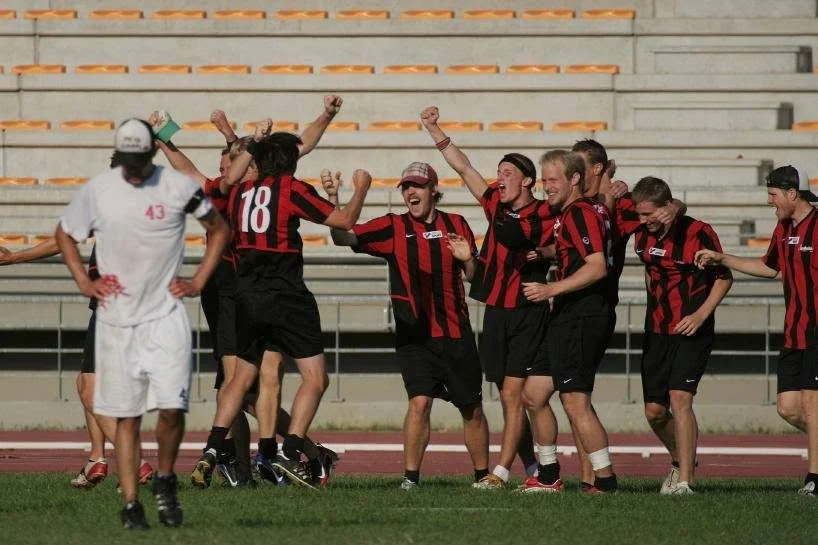
25 Editions. 34 Years. Three Divisions. One European History.
In 1992, it began. A few clubs. A European competition for club teams.
The first champions came from the Netherlands and Sweden. Red Lights from Amsterdam took Women’s title. SFMSC/KFUM Örebro won the Open. Stenungsund from Sweden became the first Mixed champions in 2001.
Today, three decades later, the names are different. The competition is larger. The geography has widened. But the record still connects those first fields to the modern championship.
In the beginning, there was only worlds
the origins of the EUROPEAN club finals
In the early days of competitive ultimate in Europe, the World Championships were the dominant stage. During the 1980s and 1990s, National Team Championships were held every two years, leaving little room for a dedicated European club teams competition.
The first attempts came in 1992 and 1994, but neither developed into a consistent format.
Instead, club teams focused on the strong tournaments already established across Europe. Harbor Ultimate in the Netherlands was the premier event, often attracting teams from across the Atlantic. It was later joined by tournaments such as Windmill, Dive Hard in Sweden, Wonderful Copenhagen in Denmark, and Tom’s Tourney in Belgium, to name just a few.
WOrld clubs starting the change
The landscape began to change in the 1990s as the World Club Championships grew in importance. European teams increasingly needed a regional stage where they could test themselves against the continent’s best and prepare for the global competition.
Driven by this need, some of the leading Open teams of the era formed an unofficial alliance: the Champions League.
Elite Open teams such as Feldrenner from Germany, Flying Angels from Switzerland, Ragnarok from Denmark, Liquidisc from Finland, Clapham from the UK, and Skogshyddan from Sweden joined forces. The innovation was not simply a final tournament, but a series of smaller competitions held spring and early summer as preparation for the big events - the World Championships.
Over time, the competition between the teams became an attraction in its own right. In 2006, the EUF transformed the loose Champions League structure into a formal competition, introducing qualifying rounds and a dedicated Club Finals.
20 YEARS, or 25 or 34 – depending on how you COUNT
2026 marks the 20th anniversary of the first EUCF. It also marks the 25th edition of the European Club Finals, and 34 years since the first competition was held in 1992.
Today, European ultimate is firmly established at the international level. European club teams compete for world titles, European players are prominent on the international stage, and European youth national teams achieve strong results at World Championships.
Thirty-four years with club teams as the driving force in European ultimate.
This is their history.
1987 Nordic Club Championships, Women’s final: Stenungsund (SWE) vs SFMSC/KFUM Örebro (SWE), both Sweden
1988 unofficial European Club Championships, Open final: SFMSC/KFUM Örebro (SWE) vs Flugsaurier (AUT).
1992 1st European Club Championships, Open final: SFMSC/KFUM Örebro (SWE) vs Stenungsund (SWE).
Women: Red lights, Iceni and the rise of a deeper field
DUTCH DOMINANCE
The Women’s division began with a club that would leave its mark immediately. Red Lights from Amsterdam won the first championship in 1992. They repeated the feat in 1994. On both occasions beating Stenungsund from Sweden – a team to look out for further down in the text.
By 2001, the title belonged to Bliss from Great Britain. That Prague tournament marked a new phase. The European field was beginning to settle around clubs that would return year after year, and the event would eventually transform to a bi-annual and later on an annual event.
Woodchicas became one of the leading teams of that period with wins in 2007 and 2008. Hot Beaches brought the championship to the Czech Republic in 2010.
ICENI STARTING A DYNASTY
Throughout this period, Iceni kept returning.
The London club has won more Women’s titles than any other team in Club Finals history. Their championships include 2006, 2009 and five consecutive titles from 2011 through 2015.
Iceni has never disappeared from the European picture. That continuity matters. The team is still active, and returning again in 2026.
New challengers – new dominance
FABulous won in 2016. Atletico took the title in 2017. YAKA won in 2021, GRUT in 2024. In between these winners, CUSB Shout established itself as another major force. Winning in 2018 and 2019, and again in 2022, 2023 and 2025. The five titles is second only to Iceni.
The finals also became a meeting place for different European schools of the game.
Troubles Warsaw reached the top four in 2018 and later received the Spirit of the Game award in 2023. Cosmic Girls from Russia reached the 2019 final. Mooncup became a finalist in 2024 and 2025.
In 2025, the championship returned to Wrocław.
BFD Shout won the title. Mooncup finished second. YAKA took bronze. Iceni finished sixth and won Spirit of the Game.
The result carried a small piece of the whole history with it. A club that had helped define European women’s ultimate was still there, still competing, more than three decades after the first championship.
2010 European Club Finals, pool: Lotus (SUI) vs Jinx (GER)
2017 European Club Finals, final: Atletico (FIN) vs Iceni (GBR).
2025 European Club Finals, Mooncup (BEL) vs Shout (ITA).
Open: from Sweden to London, Bern and beyond
The early Open division belonged to SWEDEN.
SFMSC/KFUM Örebro won the first championship in 1992 and again in 1994. Both finals were against Swedish rivals, reflecting Sweden’s dominance of the scene in those years.
The 2001 title went to another Swedish club, Skogshyddan. The team became one of the defining teams of the period. Dominating with wins in 2001, 2006 and 2008, in an era where the championship still hadn’t found it’s annual rhythm.
In 2001, in Prauge, Skogs beat Clapham in the teams first final. Two more would follow, with two wins to Skogs, and one to Clapham. This decade long battle for supremacy transformed into an epic rivalry that defined that early era of ultimate in Europe.
CLapham’s decade of dominance.
Clapham reached the final in 2001, won it in 2005 and 2007. Chevron Action Flash won in London in 2009. Flying Angels Bern took consecutive titles in 2010 and 2011. In 2010, Flying Angels beat the Skogshyddan side in the final.
Then, Clapham’s long run followed. In 2012, Clapham built the most sustained period of success the Open division have seen. From 2012 through 2018, Clapham won seven consecutive championships. They returned to the top again in 2021 and 2023, setting the total win count to eleven, and with aspirations to end 2026 with win number twelve.
THE TITLE SHIFTING once more.
CUSB La Fotta reached the final in 2015, 2016, 2018 before finally winning in 2019. Ranelagh captured the title in 2022. Mooncatchers became champions in 2024 and defended the title in 2025.
The 2025 final in Wroclaw placed two different histories against each other: Mooncatchers vs Wall City.
Wall City from Berlin, a team with a pedigree dating back to the 1980s and a history that began before the first Club Finals, when the wall was still standing. In 2025, they reached their first final. On the opposing side, Mooncatchers from Brussels. The young guns of Euro ultimate, sprung out of the Belgium youth program harvesting success after success.
Mooncatchers defended their title. Clapham finished third. Chevron Action Flash coming fourth.
A fitting finale to the first era of Club Finals: The names had changed, but also reflecting the history and legacy.
2006 European Club Finals, final: Clapham (GBR) vs Skogs (SWE)
2019 European Club Finals, semi: La Fotta (ITA) vs RealFive (RUS).
2026 European Club Finals, Mooncatchers (BEL) vs Wall City (GER).
Mixed: a different history with its own powers
mixed started Late – now the dominating force
Mixed hasn’t followed same map as Women’s and Open. Mixed was first introduced on the world scene in 1999 – and in the early years as “CoEd”. Today, mixed is by far the most dominant division in all of ultimate.
In the early years, clubs from Sweden, the Netherlands and Great Britain helped establish the division.
Stenungsund won the first European Club Championships title in 2001, perhaps drawing on the lessons learned from the Open and Women’s teams’ defeats in the first Club Finals.
There were only three more Club Finals with Mixed as a division from 2001 to 2014. Friselis won in 2005, Brighton in 2009 and Bear Cavalry followed in 2013. In 2014 also Mixed became an annual championship.
The era of Grut and Deep Space
The later years brought a wider group of contenders. SUN won in 2014, Grandmaster Flash took the title in 2015. Reading Mixed won in 2016 and SeE6 became champion in 2018.
In 2017, dutch power house GRUT claimed it’s first title, followed by wins 2021 and 2022. With three championships, GRUT is the most successful team in the history of the Mixed division.
Salaspils put Latvia on the European map with its 2019 championship and reached the final again in 2021. First beating Grut in the final, two years later losing to the dutch side.
In the later years, Deep Space became another constant.
The British club won in 2023 and 2024, and reaching the final in 2025.
In 2025, Mosquitos and Deep Space met in the final in Wrocław. Mosquitos won. Deep Space took silver. Tiefseetaucher took bronze.
Deep Space also received Spirit of the Game.
Mixed has evolved from the latest entry to the driving force of European ultimate. Teams return. Players move between divisions. Clubs build around different generations and divisions.
2017 European Club Finals, final: GRUT (NED) vs Colorado (GER)
2019 European Club Finals, final: Salaspils (LAT) vs GRUT (NED).
2026 European Club Finals,final: Mosquitos (AUT) vs Deep Space (GBR).
Spirit belongs in the record too
The parallel championship title
Spirit of the Game is a core principle of ultimate, but it is not without controversy. This is especially apparent in how the Spirit award is decided and what it represents.
The system used today was introduced by WFDF in 2014. It followed a series of high-profile incidents at international events, where weaknesses in the core values of ultimate were exposed. Before 2014, Spirit winners were chosen through a less structured process, often with a single vote from each participating team.
Whatever the view, Spirit of the Game is fundamental to ultimate. This is particularly true here in Europe. Neither Game Advisors nor Observers have been introduced at EUF events. In fact, the European Club Finals is probably the last major international championship at the highest continental level to retain the original self-officiated system.
Spirit of the game at CLub Finals
There were no Spirit winners for the first Club Finals started in 1992 and 1994. The first awards were given in 2001, when Ouf, Flying Angels Bern and Bliss won in Mixed, Open and Women’s respectively.
Since then, the award has produced its own list of winners. Some are familiar names from the European club scene. Flying Angels Bern won Spirit in Open in 2001 and again in 2019. Nice Bristols won the Women’s award four times between 2012 and 2018.
The award has also been shared several times. In 2015, Nice Bristols shared the Women’s Spirit award with Iceni. Other years with shared winners are Women in 2017 with Mantis (AUT) and Crazy Dogs (SUI), Open in 2014 with Gentle (BEL) and Cambridge (GBR), and Mixed in 2024 with Sesquidistus (FRA) and Nullacht! (GER).
Competitive with spirit
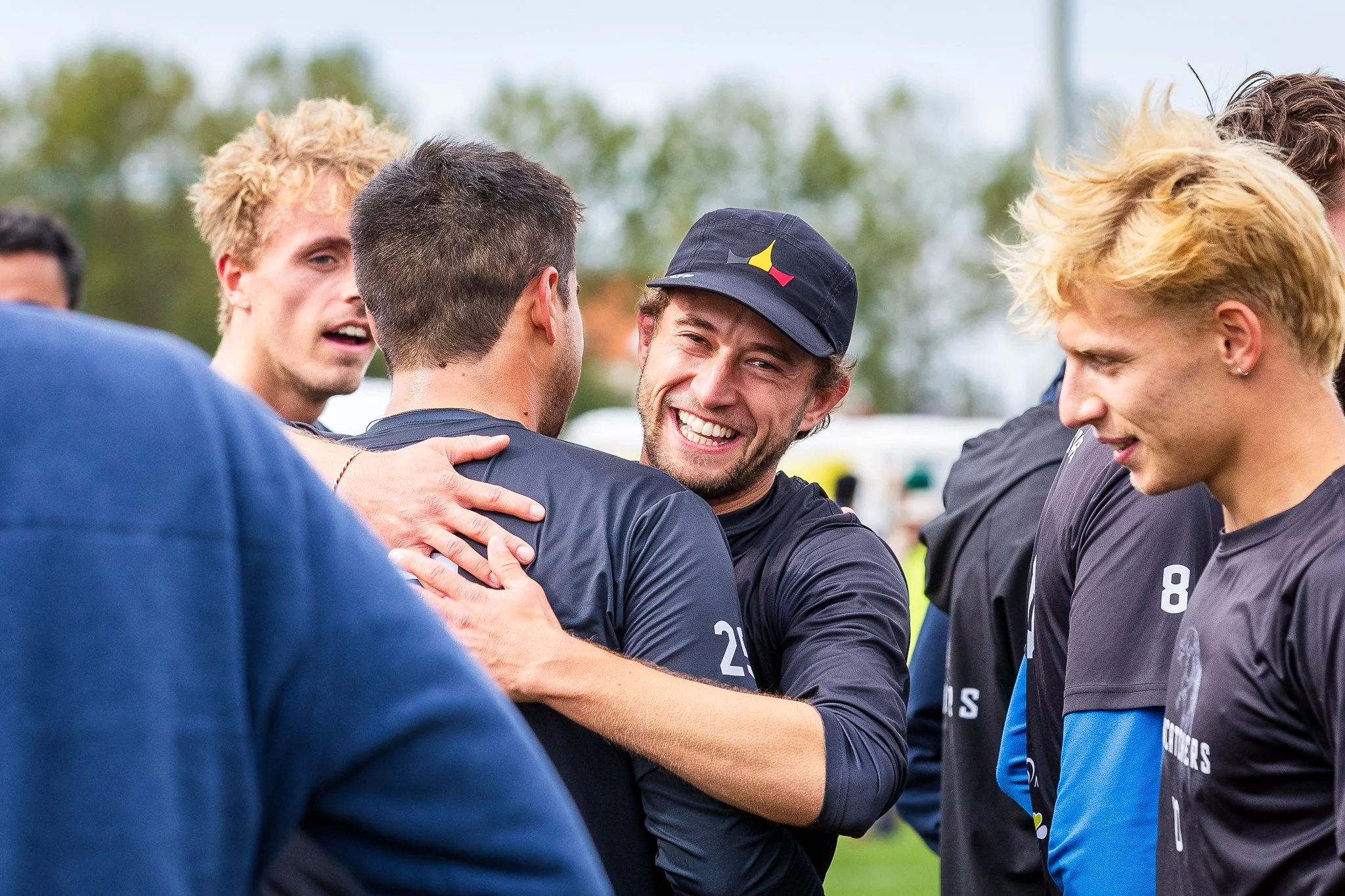
Competitive and spirited play co-exist. Examples are Flying Angels, Wall City, Clapham and Devon as Spirit winners in Open. In Mixed, Deep Space and Reading won the award in both 2023 and 2025. Iceni, Jinx and Bliss are champions who have won it all in Women’s.
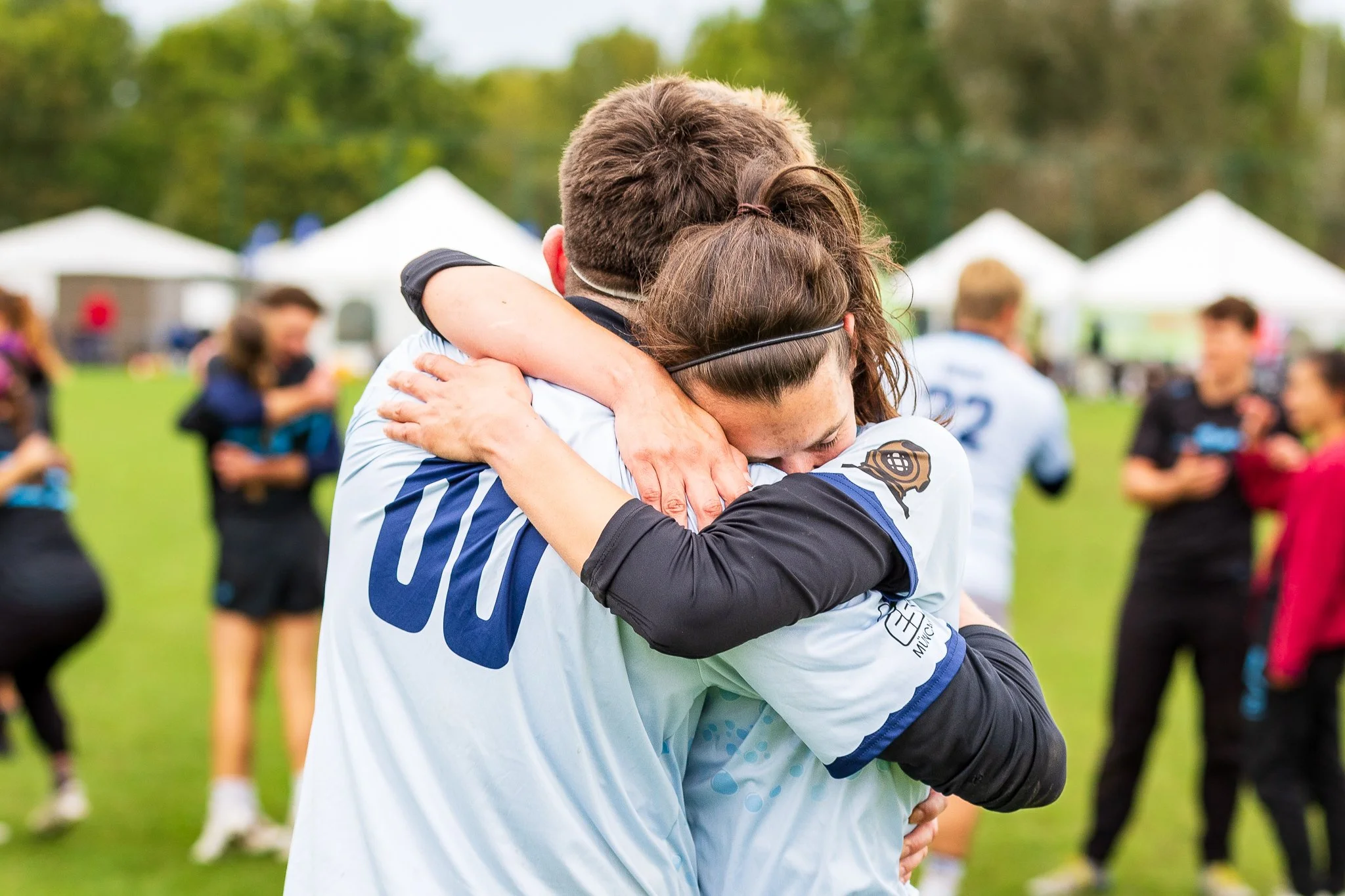
Taking The Double – winning both the Spirit award and the Championship title – has happened four times. All four coming from British teams: Bliss won the Women’s title and Spirit in 2001. Clapham took The Double in Open in 2005. In Mixed, Reading did the same in 2016, and Deep Space in 2023.
The runner ups and the close calls
The teams that kept knocking
A championship history is usually written through its winners. The runners-up tell another story.
Clapham spent years challenging before becoming the dominant Open club. La Fotta had three finals against Clapham before finally winning in 2019. Wall City reached its first Open final in 2025. The ever-so-talented Bad Skid collected several silver and bronze medals between 2013 and 2018. Ragnarøk was a regular contender but never all the way.
In Women’s, Yaka has a decade of high-level ultimate under its belt, but only one win, in 2021. Mooncup has now reached two consecutive finals and is coming into the 2026 Club Finals as one of the favorites with the highest season rating. Cosmic Girls came within one match of the title in 2019. JinX has a win from 2005 and after that a 20-plus-year legacy of top level ultimate.
Mixed also has its list of almosts.
In a division where absolutely anything can happen, we see highs and lows year after year. Mosquitos clinched the title out of the blue in 2025. Reading won in 2016 and reached the final in 2023. Now, Reading enters the 2026 Club Finals on a wildcard, seeded 16th and last. In recent years, both Tartu and Tiefseetaucher have come close, but not to the top.
Those teams are part of the championship record, even when the gold medal went somewhere else.
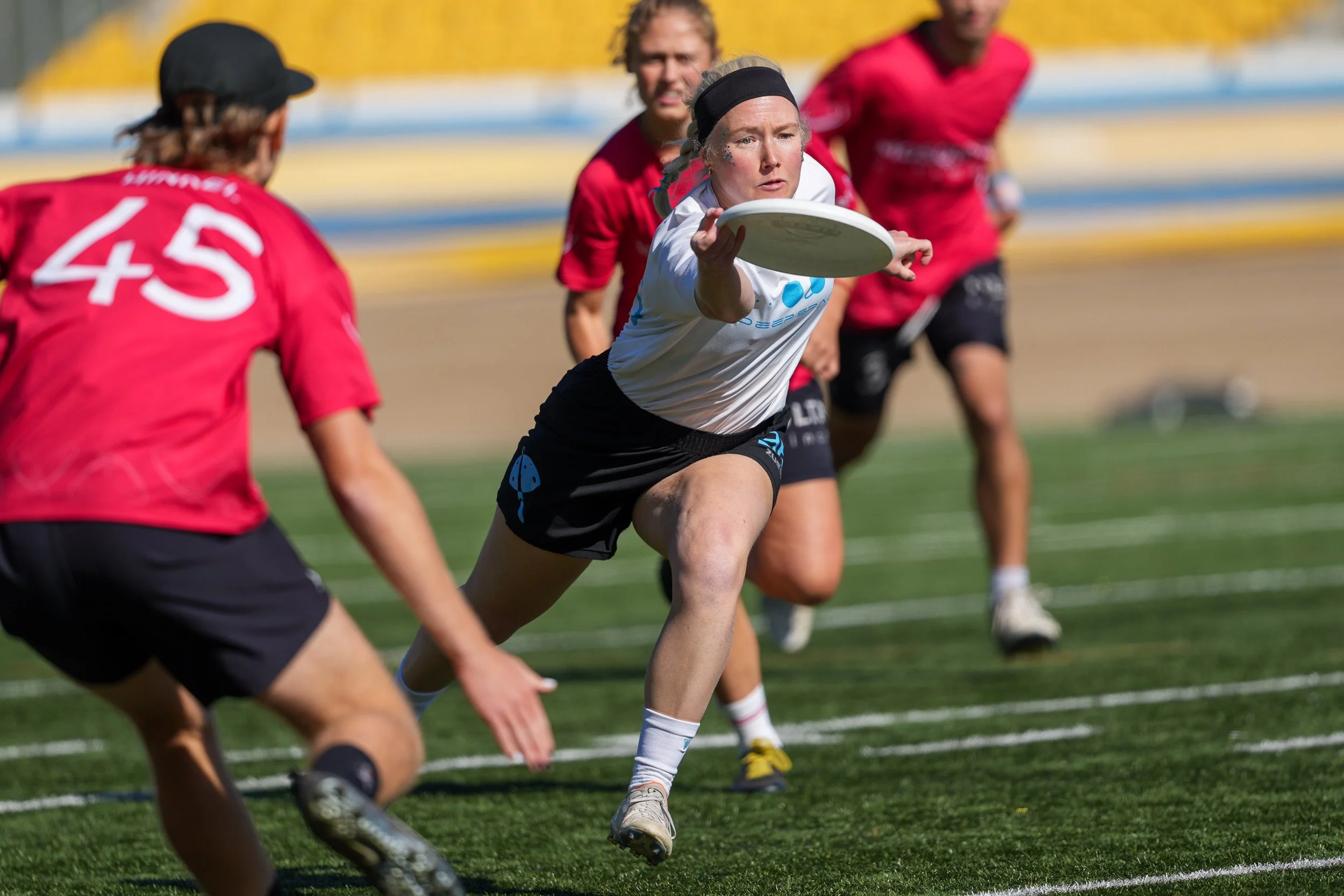
CLUB FINALS – A beautiful way to see europe
places matter
The Club Finals Circus has moved constantly. Rotenburg hosted the first edition in 1992, followed by Eching in 1994. Prague hosted in 2001. Florence, Basel, Paris, London, Blanes, Bruges and Frankfurt followed.
Two locations stand out. Carole, the airfield outside Venice, hosted the Club Finals in 2017, 2019 and 2022.
But the latest and most frequent host is Wrocław. It first hosted in 2015, then again in 2018, 2023 and 2025. In 2026, the Club Finals return to Wrocław for a fifth time. In many ways, Wroclaw has become the home of the Club Finals.
Unsung heroes
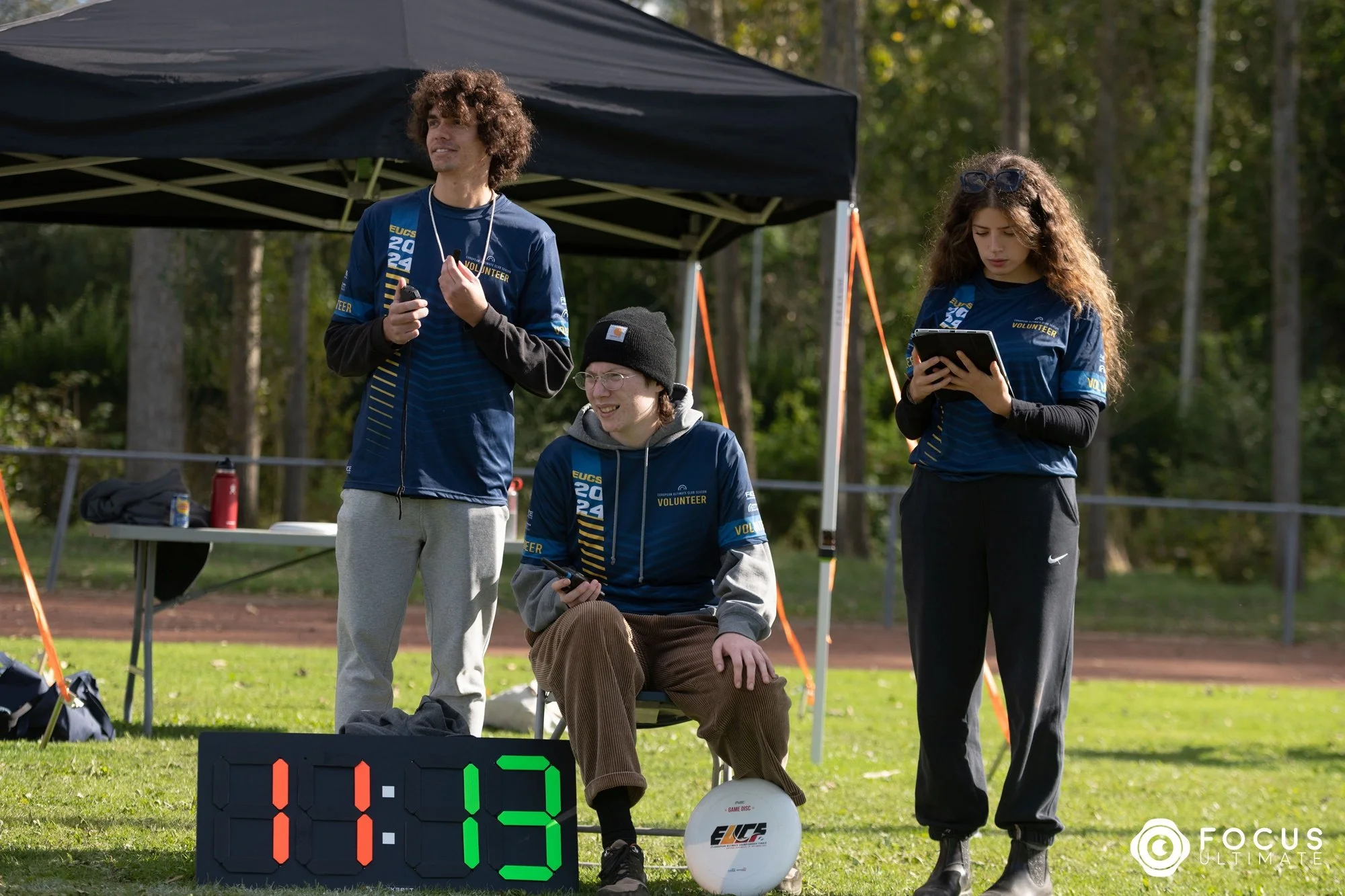
The story of the Club Finals is also the story of the people outside the spotlight: the volunteers and staff, coaches and fans, the local organisers and team administrators.
Since 1992, their numbers have reached into the thousands.
The local crew, starting months before the first game, with the grinding process of getting the pieces together.
The volunteers and staff during the event. Arriving early each morning, leaving late long after the last game. Carrying cones, discs, tables, tents and scoreboards, Preparing breakfast, lunch and dinner. Keeping the event moving by being on-site all day. Then up early next morning, doing it all again. Tomorrow. And again next year.
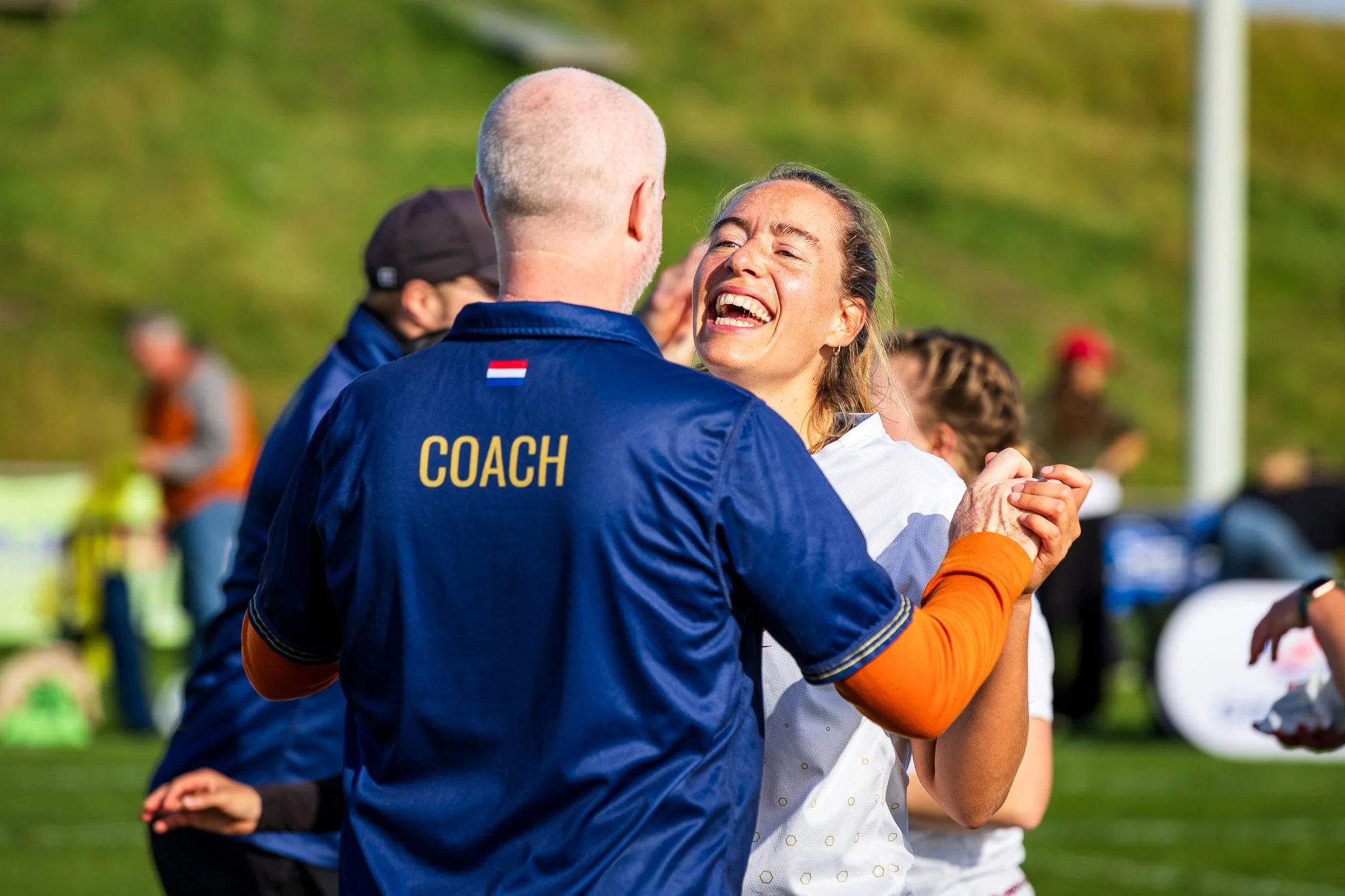
The fans and family coming to see their team. Coaches and team administrators preparing the team and players for final show of the season.
For the love of the game and the people.
For the joy of being part of a community.
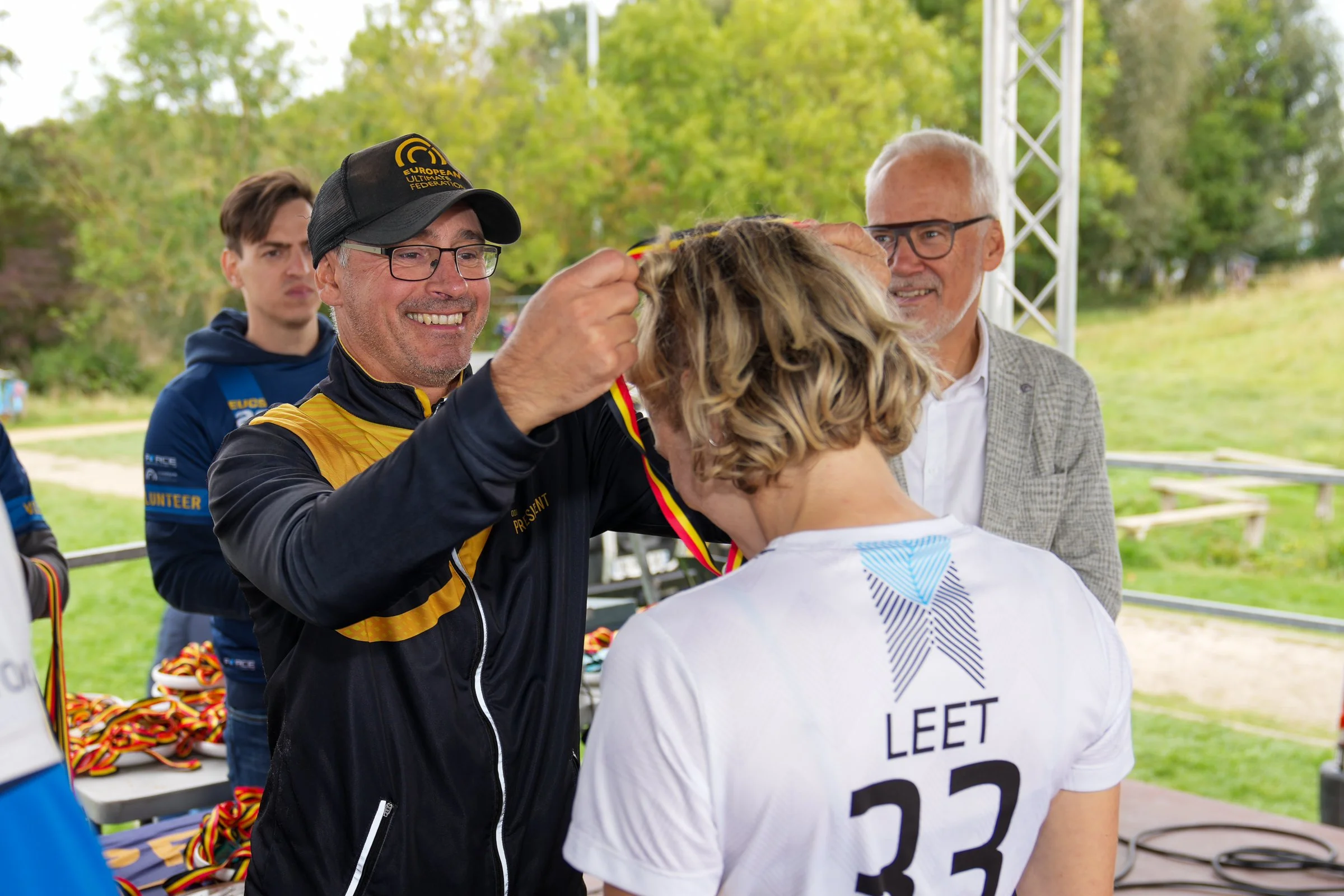
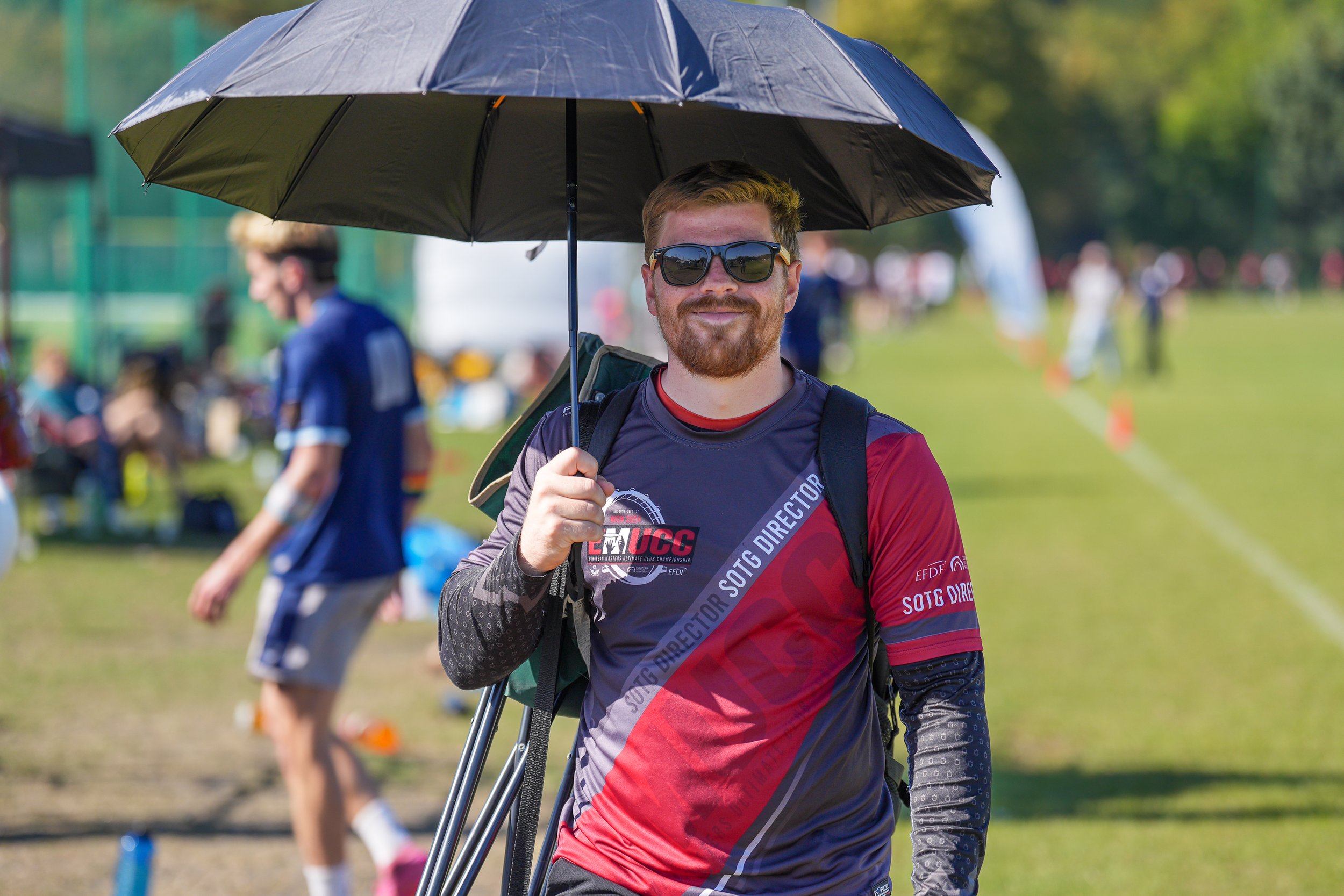
20 EUCS, 25 CLUB FINALS, 34 years
Twenty-five editions, and counting
Looking back across the years, and the pattern is not one of permanent dominance.
It is succession.
Örebro. Red Lights. Stenungsund.
Skogshyddan. Clapham. Iceni.
Flying Angels. Chevron.
Shout. La Fotta.
Salaspils. Ranelagh.
GRUT. Deep Space.
Mooncatchers. Mosquitos.
Spirit winners. Runners ups. Close calls.
Each belongs to a different chapter.
Some stayed for years. Some appeared once and disappeared. Some lost finals before finally winning one. Others built their reputation through repeated appearances, Spirit awards and near misses.
The players changed with them. So did the cities. So did the volunteers. So did the shape of European ultimate.
But the championship keeps producing the same essential thing: a field where clubs arrive with a season behind them and three days ahead of them. Every title becomes part of the record. Every final creates another line in the history.
Hundreds of teams. Thousands of players.
Twenty-five editions. Thirty-four years. Three divisions.
A European history still being written.